Polishing Concrete For Low-Maintenance Floors With Long-Lasting Durability
Polishing concrete produces the most delicate, long-lasting polish of any ornamental concrete. It’s most often used on industrial floors, but it’s also becoming popular on commercial, retail, and even residential floors. When people hear the word “polished concrete,” they frequently have a misunderstanding.
Polished concrete is a multi-step procedure in which a concrete floor is mechanically ground, honed, and polished using bonded abrasives to cut the surface of a concrete floor. It is then polished with each cut to attain a certain level of look
Although the concrete is not polished, the ultimate effect is a high gloss akin to a glossy surface. The concrete is ground in many stages during the procedure. Concrete polishing is a comparable procedure to wood finishing. When sanding wood, begin with coarse-grit sandpaper and work your way down to fine-grit sandpaper until the required smoothness is achieved.
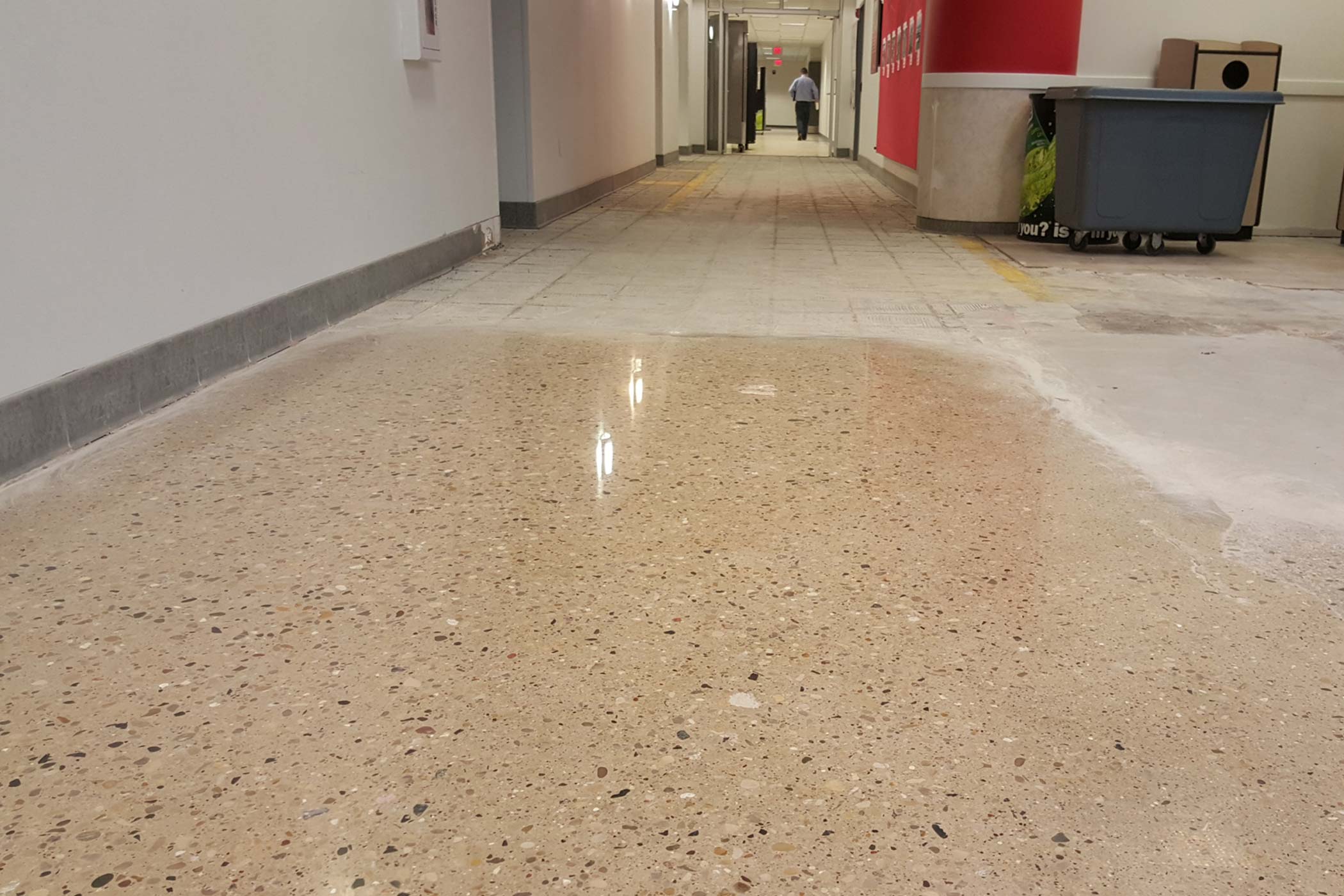
However, polishing concrete requires diamond-impregnated wheels, discs, and pads from coarse to fine grit. As a consequence, the floor is exceptionally smooth and shiny.
Even though the concrete is not polished, the result is a high gloss similar to a polished surface. Throughout the operation, the concrete grinding Auckland occurs in many phases.
Concrete polishing is a process similar to wood flooring finishing. When sanding wood, start with coarse-grit sandpaper and work your way down to fine-grit sandpaper until the desired smoothness is obtained.
Densifiers or hardeners can be used during the process to strengthen the cement matrix between the particles. They react with free lime to form a gel. The gel hardens over time, plugging pores and capillaries in the concrete. It enhances the strength, density, and impermeability of the concrete.
The concept of having a floor that requires little or no care is the most appealing aspect of polished concrete. Polishing eliminates the need for topcoats, sealers, or waxes or any other glossy materials. Dusting is no longer necessary, and cleaning up spills and debris is a breeze.
Polished concrete does not have to be dull grey. Colour can be added with acid stains and concrete dyes. It is done before fine polishing, while stains and colours are still able to penetrate. Using a variety of colours and patterns may transform a polished floor into a one-of-a-kind work of art.
Polishing concrete achieves an unrivalled level of durability and maintenance-free finish. It’s fast becoming a popular alternative to marble, tile, and granite. For more information visit our Website